Sizing BESS Is Not Like Sizing Solar Panels
When you size a solar park, the formula is relatively predictable: take your available land area, multiply by irradiation (Cyprus enjoys ~1,800 kWh/m²/year), select your panel Wp, and you get a nameplate capacity. A 10-hectare site with trackers yields roughly 5 MW. The maths is deterministic.
BESS sizing is fundamentally different. You cannot simply say “I have a 5 MW park, therefore I need X MWh of storage.” The optimal battery size depends on four interdependent variables that are unique to your project:
- Your curtailment profile — how many MWh are you losing daily, and during which hours?
- Your grid export constraints — what is your connection agreement's maximum export capacity?
- Electricity pricing patterns — how wide is the spread between midday and evening prices?
- Your investment horizon — are you optimising for fastest payback or maximum lifetime revenue?
Get the sizing wrong and you either leave money on the table (undersized) or pay for capacity you'll never use (oversized). This guide walks through the methodology we've developed across our portfolio to get it right.
The Three Key Variables
Every BESS system is defined by three interrelated parameters. Understanding how they interact is the foundation of correct sizing.
Duration (Hours)
How long the battery discharges at rated power
Duration defines how many hours the system can export at its full MW rating. A 2-hour system discharges fully in 2 hours; a 4-hour system lasts 4 hours.
Power (MW)
Maximum instantaneous export capacity
Power rating must match your grid connection export capacity. If your connection agreement allows 5 MW export, your BESS power rating should be 5 MW.
The grid connection is the bottleneck. A 10 MW battery on a 5 MW connection can only ever export 5 MW at any given moment.
Energy (MWh)
Total storable energy = Duration × Power
Energy capacity is what you actually store and sell. It's the product of duration and power. This is the number that determines your revenue ceiling per cycle.
MWh = MW × Hours
5 MW × 4h = 20 MWh
MW:MWh Ratios from Our Portfolio
Standard configurations across the Lighthief portfolio
Understanding Duration: 2-Hour vs 3-Hour vs 4-Hour
Duration is the single most consequential sizing decision you'll make. It determines your CAPEX, your daily dispatch window, and your ability to capture future revenue streams. Here's how the three standard configurations compare, using confirmed February 2026 pricing from Lighthief for a reference 5 MW park.
| Parameter | 2-Hour | 3-Hour | 4-Hour |
|---|---|---|---|
| Configuration | 5 MW / 10 MWh | 5 MW / 15 MWh | 5 MW / 20 MWh |
| €/MWh Installed | Contact for current pricing — per-MWh cost decreases with longer duration | ||
| Total CAPEX | Contact for current pricing (incl. grid connection + 5% contingency) | ||
| Evening Dispatch Window | 17:00–19:00 | 17:00–20:00 | 17:00–21:00 |
| Year 1 Energy Captured | 2,459 MWh (57%) | 3,264 MWh (76%) | 3,755 MWh (87%) |
| Payback (47% curtailment) | 4.0 years | 4.3 years | 4.3 years |
| Containers (@ 5.015 MWh each) | 2 containers | 3 containers | 4 containers |
| Future-Proofing | Limited | Moderate | Best |
2-Hour System
Lowest capital outlay with 4.0-year payback and 26% ROI. However, captures only 57% of available curtailed energy — 1,839 MWh/yr overflows and is permanently lost. Only 2 hours of evening dispatch limits future arbitrage potential.
3-Hour System
Captures 76% of curtailment with 33% more revenue than the 2-hour system, for a near-identical 4.3-year payback. Covers most of the evening peak (17:00–20:00) when prices average €212/MWh. Strong balance of capital outlay and energy recovery.
4-Hour System
Best per-MWh cost (~17% lower than 2-hour) and captures 87% of curtailment — 53% more energy than the 2-hour system. Full evening coverage (17:00–21:00). Same 4.3-year payback as 3-hour, drops to ~3.0 years with DAM arbitrage.
All pricing reflects confirmed Feb 2026 pricing from Lighthief, including grid connection costs and 5% contingency. Total CAPEX includes EPC, civil works, grid infrastructure, commissioning, and insurance.
Matching Duration to Your Curtailment Profile
A common misconception is that all BESS sizes recover the same amount of curtailed energy, since “the constraint is the curtailment, not the battery.” Our day-by-day analysis of 365 days of real operational data from a 5 MW park proves this wrong.
Daily curtailment is highly variable — from 0 MWh on cloudy winter days to 40+ MWh during spring peaks. A smaller battery overflows on high-curtailment days, and that spilled energy is permanently lost to the PV park.
The Overflow Effect: Bigger Battery = More Revenue
Average daily curtailment is ~11.8 MWh, but this masks huge seasonal variability. March averages 18.5 MWh/day while December averages 5.2 MWh/day. A 2-hour system (8.5 MWh usable daily capacity after DoD and SOH) overflows on most spring and autumn days. That energy is revenue your PV park permanently loses.
The key insight: despite a 4-hour system capturing 53% more energy than a 2-hour, the payback periods converge (4.0 vs 4.3 years) because CAPEX scales proportionally. All three durations pay back within 4.3 years. The 4-hour system generates €199K/yr more gross revenue (€577K vs €378K) — making it the strongest choice for absolute return.
When Longer Duration Wins
The analysis above applies to today's regulatory environment, where BESS can only charge from its co-located solar park. But Cyprus is developing Day-Ahead Market (DAM) arbitrage legislation that will fundamentally change the equation.
When DAM arbitrage access passes, your BESS will be able to charge from the grid— not just from your own curtailed solar. At that point, duration directly equals revenue capacity. More hours of storage means more cycles, more arbitrage, and more income.
The DAM Arbitrage Revenue Model
How a 4-hour system unlocks grid charging revenue
Charge Window (Midday)
Discharge Window (Evening)
The additional €170K–€280K/year from grid arbitrage further enhances the 4-hour system's economics. Its already-strong 4.3-year payback drops to approximately 3.0 years — significantly faster than any other duration.
The strategic insight: a 4-hour system already captures 53% more energy than a 2-hour at the same 4.3-year payback. With future DAM arbitrage, the gap widens dramatically. If you believe legislation will pass within the 15-year warranty period (virtually certain given EU directives), the 4-hour system delivers far superior lifetime returns.
The Sizing Decision Framework
After sizing BESS across our portfolio, we've distilled the decision into a practical framework. Use this to determine which duration best matches your objectives.
Primary goal is curtailment recovery now
Fastest payback (4.0 years) with lowest capital outlay. Captures 57% of curtailment (2,459 MWh/yr) — 1,839 MWh permanently lost. Best for operators with constrained capital who accept lower absolute revenue.
Balance between today's returns and future potential
Captures 76% of curtailment (3,264 MWh/yr) with payback matching the 4-hour system at 4.3 years. Covers the core evening peak (17:00–20:00) and generates 33% more revenue than 2-hour.
Maximum future-proofing and best per-MWh pricing
Captures 87% of curtailment (3,755 MWh/yr) — 53% more than 2-hour. Best €/MWh cost (~17% lower). Full evening dispatch (17:00–21:00). Payback: 4.3 years now, drops to ~3.0 years with grid arbitrage.
Park >10 MW with ambitions for ancillary services
Larger parks benefit from economies of scale on 4-hour systems. The per-MWh cost advantage compounds with size. Longer duration also qualifies for more ancillary service products (frequency regulation, spinning reserve) when those markets open in Cyprus.
Our recommendation for most clients: go 4-hour. It captures 87% of curtailment (vs 57% for 2-hour), generates €199K/yr more revenue, and pays back in 4.3 years — the same payback as 3-hour. The 17% per-MWh cost advantage and future DAM arbitrage upside make it the strongest risk-adjusted investment. If capital is constrained, a 2-hour system still delivers 26% ROI with a 4.0-year payback.
Container Count: How It Scales
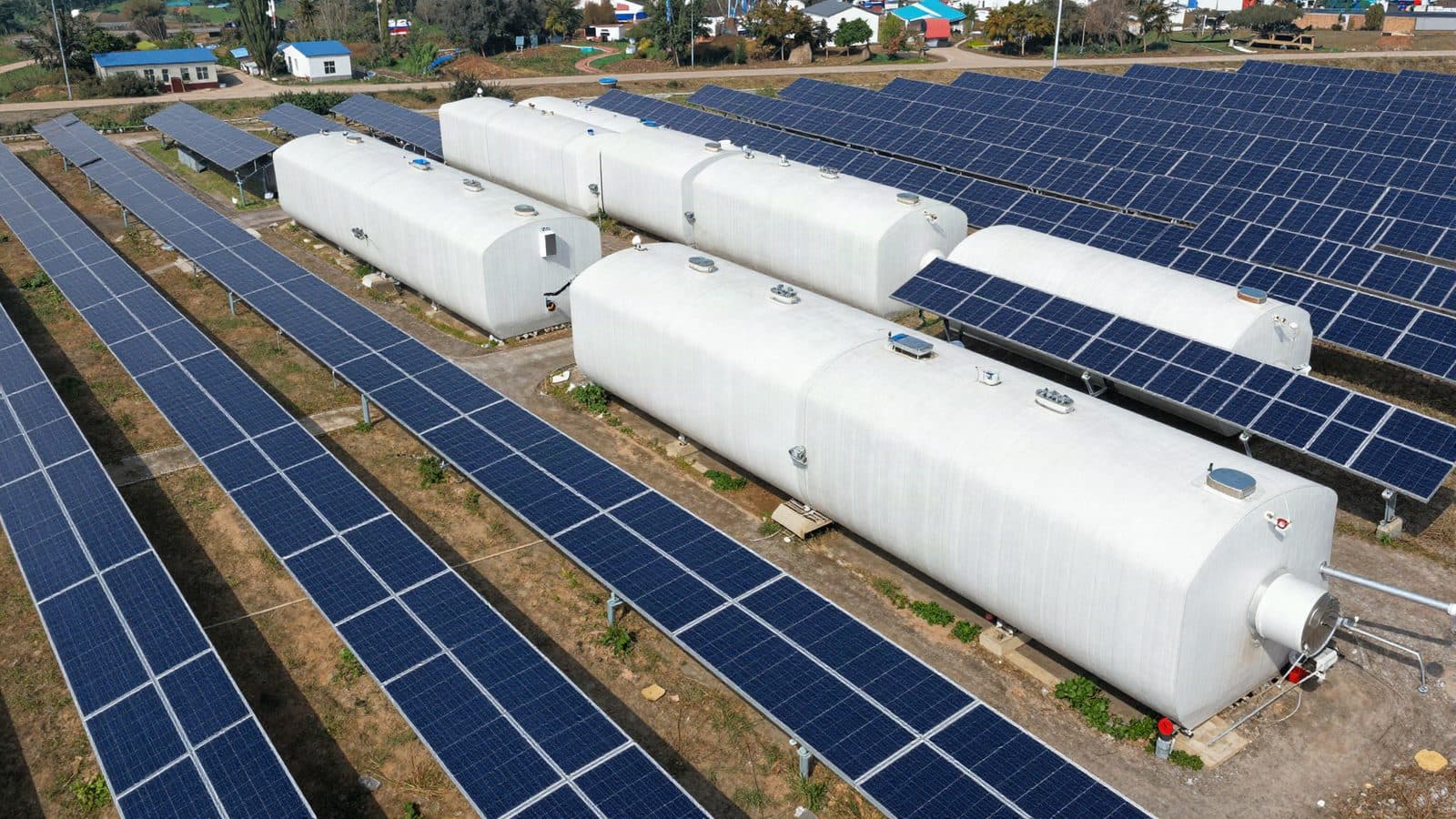
Each Linyang BESS container in our portfolio holds 5.015 MWh of nameplate energy capacity. This standardised unit makes scaling straightforward — simply multiply containers by the number of MWh you need.
| System Size | Power | Energy | Containers | Footprint |
|---|---|---|---|---|
| Small (2-hour) | 5 MW | 10 MWh | 2 | ~60 m² |
| Standard (4-hour) | 5 MW | 20 MWh | 4 | ~120 m² |
| Medium (4-hour) | 10 MW | 40 MWh | 8 | ~240 m² |
| Large (4-hour) | 20 MW | 80 MWh | 16 | ~480 m² |
Each container is a self-contained unit with integrated battery modules, BMS, thermal management, and fire suppression — delivered as a plug-and-play system.
Get Your Custom BESS Sizing Assessment
Every park has a unique curtailment profile, grid connection, and revenue target. We'll model your specific scenario using real operational data and confirmed pricing to recommend the optimal duration and configuration.
Whether you're sizing for a single 1 MW site or a portfolio of parks, our team will deliver a detailed financial model with payback projections under multiple curtailment and arbitrage scenarios.
Contact Alexander Papacosta: +357 99 164 158 | office@lighthief.com