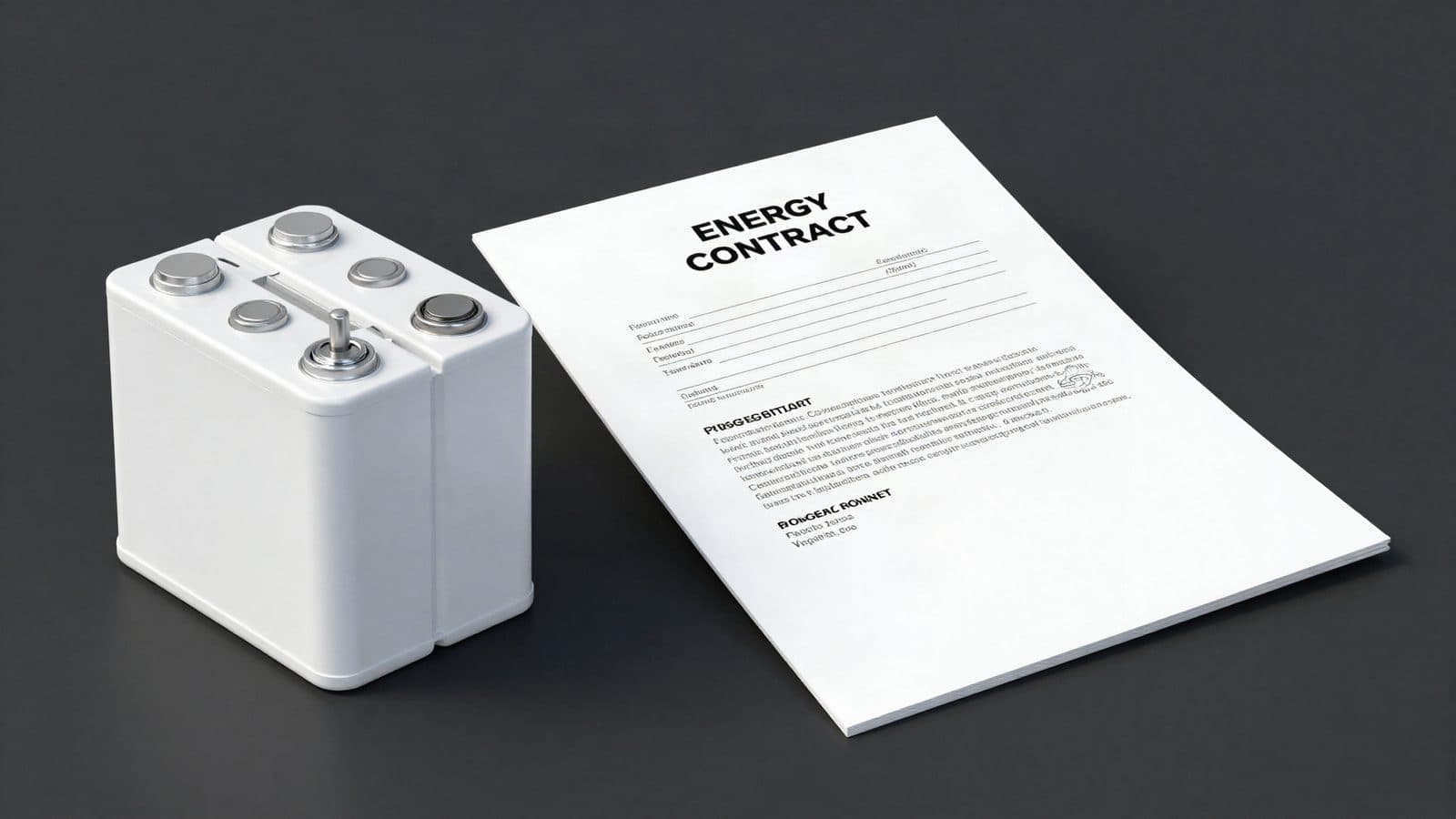
Why Warranties Make or Break Your Investment
A BESS is a 15–20 year asset. Unlike solar panels that sit passively on racks, battery systems are electrochemical machines that degrade with every cycle, respond to thermal stress, and depend on dozens of interconnected components — from individual cells to power conversion systems to cooling infrastructure. Over two decades, things will go wrong.
The warranty structure determines whether you’re protected against degradation, equipment failure, and performance shortfalls — or whether you’re left absorbing losses that erode your investment returns. Most buyers focus on the headline price per MWh but ignore the warranty terms. This is a costly mistake.
We’ve seen proposals where the upfront price looks attractive, but the warranty package is thin: vague SOH thresholds, no liquidated damages for downtime, and extended warranty pricing left as “to be negotiated.” When you model these gaps over 15 years, the “cheap” system costs significantly more than a properly warranted one.
In our portfolio, warranty terms were negotiated as a package — not line by line. The result is a comprehensive protection framework that satisfies both investors and insurers. Here’s what that looks like.
The Four Types of BESS Protection
Every serious BESS procurement should include four distinct layers of protection. Each serves a different purpose, and gaps in any one of them create exposure that can’t be covered by the others.
Capacity Warranty (SOH Guarantee)
Guarantees minimum state of health over time
The most critical warranty for any battery system. It defines the minimum usable capacity at key milestones throughout the battery’s life. Without year-by-year SOH milestones, you have no contractual recourse when degradation exceeds expectations.
Our Confirmed Terms:
- Year 5: ≥85% SOH
- Year 10: ≥79.58% SOH
- Year 15: ≥70% SOH
At year 15, your 20 MWh system still delivers at least 14 MWh of usable capacity — guaranteed.
Availability Guarantee
System must be operational a guaranteed percentage of time
Availability guarantees ensure your system is ready to charge and discharge when you need it. A system that’s offline during peak pricing windows costs you real revenue — and you need contractual compensation for that.
Our Confirmed Terms:
- Availability target: 97%
- Liquidated damages: €30/MWh/day for shortfalls
- Measured: Monthly rolling average
If availability drops below 97%, the service provider pays — not you.
Cycle Life Warranty
Guarantees minimum cycles before end of life
Cycle life defines how many charge-discharge cycles the battery can complete before degradation reaches end-of-life thresholds. This directly impacts your revenue model — more cycles means more years of productive operation.
Our Confirmed Terms:
- Cycle count: 7,000 cycles
- Depth of discharge: 70% DOD
- Cell chemistry: EVE LFP (LiFePO&sub4;)
At daily cycling, 7,000 cycles equates to 19+ years of productive operation.
Performance Bond
Financial guarantee that the EPC delivers as specified
A performance bond is a financial instrument — typically a bank guarantee or surety bond — that protects the buyer if the EPC contractor fails to deliver the system as specified. It’s your financial safety net during construction and the defect liability period.
Standard Terms:
- Value: 5–10% of contract value
- Duration: Construction + defect liability period
- Held in: Escrow or bank guarantee
For a €2M+ BESS installation, a performance bond of €100K–200K provides critical leverage if the contractor underdelivers.
OEM Warranty vs EPC Guarantee
This is the distinction that most buyers miss — and it can leave you exposed to significant financial risk. There are two separate layers of contractual protection, and they cover different failure modes entirely.
When a system underperforms, the first question is: whose fault is it? If a battery cell fails prematurely, that’s a manufacturing defect — the OEM is responsible. But if the system delivers 15% less energy than projected because the installer wired the cooling incorrectly or misconfigured the EMS, the OEM warranty won’t cover it. That’s an installation issue, and you need the EPC guarantee.
OEM Warranty
Manufacturer responsibility
- Covers hardware defects in battery cells, PCS, BMS, and cooling systems
- Cell-level SOH guarantee against premature degradation
- Cycle life guarantee based on specified DOD and temperature conditions
- Replacement or repair of defective components at OEM cost
- Does not cover installation errors, configuration issues, or site-specific problems
EPC Guarantee
Installer responsibility
- Covers system-level performance as installed and commissioned
- Guarantees the system delivers specified MW and MWh at the point of connection
- Covers workmanship: cabling, connections, cooling setup, EMS configuration
- Defect liability period (typically 24 months from PAC)
- Does not cover inherent cell degradation or manufacturing defects
Critical: If your contract bundles OEM warranty and EPC guarantee into a single clause, you have a liability gap. When something fails, each party points to the other. Insist on separate, clearly defined warranty and guarantee sections in your contracts.
LTSA: The Long-Term Service Agreement
A Long-Term Service Agreement (LTSA) is your ongoing protection after the initial warranty period. It covers scheduled maintenance, emergency repairs, spare parts, remote monitoring, and availability commitments. Without an LTSA, you’re responsible for maintaining a complex electrochemical system with your own resources — or paying market rates for ad hoc service calls.
The LTSA should be negotiated and priced at the time of procurement, not after commissioning. Post-commissioning, you have zero negotiating leverage — the service provider knows you have no alternative.
Our LTSA Structure
Lighthief Cyprus Ltd — 15-year Tier C comprehensive service
Contract Details
- Duration: 15 years
- Tier: C (comprehensive)
- Rate: €1,740/MWh over contract period
- Response SLA: 4-hour response time
- Provider: Lighthief Cyprus Ltd (local, OEM-backed)
Included Services
- Preventive maintenance (quarterly)
- Corrective maintenance (on-call)
- 24/7 remote monitoring
- Spare parts management
- Firmware updates and optimisation
Extended Warranty Pricing
Confirmed upfront — not “to be negotiated”
One of the most important aspects of our LTSA is that extended warranty pricing is locked in at contract signing. You know exactly what years 6–15 will cost before you commit.
Years 6–10
€1,661.68/MWh
Years 11–15
€2,083.72/MWh
The Buyer's Protection Checklist
Before signing any BESS EPC contract, verify that every item on this checklist is explicitly addressed. Missing even one creates a gap that can cost you hundreds of thousands over the asset’s lifetime.
SOH Guarantee with Year-by-Year Milestones
Not just an end-of-warranty threshold. You need milestones at years 5, 10, and 15 minimum. If degradation exceeds the curve at any milestone, the OEM must remediate — replace cells, augment capacity, or compensate financially.
Cycle Life Guarantee at Specified DOD
The cycle count must specify the depth of discharge. 7,000 cycles at 70% DOD is very different from 7,000 cycles at 100% DOD. Ensure the DOD matches your operating profile.
Availability Guarantee with Liquidated Damages
A 97% availability target is meaningless without financial consequences. Liquidated damages (€/MWh/day) create accountability and ensure the service provider is incentivised to keep your system running.
Separate OEM Warranty and EPC Guarantee
These must be distinct contractual sections with clear delineation of responsibility. When hardware fails, the OEM pays. When installation causes underperformance, the EPC pays. No ambiguity, no finger-pointing.
Performance Bond (5–10% of Contract Value)
Financial security held in escrow or as a bank guarantee during the construction and defect liability period. If the EPC fails to deliver, you have recourse without litigation.
24-Month Defect Liability Period (DLP)
The period after commissioning during which the EPC contractor must fix any defects at their own cost. 12 months is standard but insufficient for BESS; push for 24 months to capture seasonal performance variations.
LTSA with Defined SLAs and Response Times
A 4-hour response time SLA with clear escalation procedures. The LTSA should specify preventive maintenance schedules, corrective maintenance commitments, and spare parts availability.
Spare Parts Strategy
Should you purchase spare parts upfront or rely on warranty replacement? The answer depends on lead times and your risk tolerance. For our portfolio, we maintain a shared spare parts pool across multiple parks — cost-effective and fast.
Extended Warranty Pricing Confirmed Upfront
“Available upon request” or “to be negotiated at year 5” is not acceptable. Extended warranty rates should be locked in at the time of initial procurement, when you have maximum negotiating leverage.
Insurance Compatibility
Your warranties must satisfy insurer requirements. If your insurer requires OEM certification, annual maintenance records, and specific fire suppression systems, your warranty and LTSA must align. Misalignment can void your insurance coverage.
Red Flags in BESS Warranty Terms
We’ve reviewed dozens of BESS proposals from OEMs and EPC contractors. These are the warning signs that indicate weak protection — or worse, deliberate ambiguity designed to limit the supplier’s liability.
Vague SOH Thresholds
“Battery will maintain reasonable performance over the warranty period.” Without specific percentages at defined milestones, this is unenforceable. Demand exact SOH figures at years 5, 10, and 15.
No Cycle Life Guarantee
If the manufacturer won’t guarantee cycle count at a specified DOD, it signals a lack of confidence in their cells. Every Tier-1 LFP manufacturer should provide this as standard.
“Best Efforts” Availability
“We will use best efforts to maintain system availability” is worthless. You need a guaranteed percentage (97% minimum) with liquidated damages for shortfalls. No percentage, no damages — no deal.
No Liquidated Damages
Guarantees without financial consequences are aspirational statements, not contractual commitments. If the supplier isn’t willing to pay when they underdeliver, the guarantee is meaningless.
Extended Warranty “Available Upon Request”
This means the supplier will price the extension after you’re locked in. By year 5, you have no alternatives and no leverage. Extended warranty pricing must be agreed at procurement.
Bundled OEM/EPC Warranty
A single warranty clause covering both hardware and installation creates a grey zone. When problems arise, neither party accepts responsibility. Always demand separate, clearly delineated warranty sections.
The Bottom Line
Warranty terms are not an afterthought — they’re the foundation of your BESS investment case. A system with excellent warranties at €115K/MWh is a better investment than a system at €100K/MWh with gaps in protection. The savings on purchase price are wiped out by a single unwarrantied failure event.
For our portfolio, we negotiated every term on this checklist — and confirmed extended warranty pricing upfront. The result is a warranty framework that gives our investors and their insurers complete confidence in the asset’s long-term value.
Want to See Our Warranty Terms?
We’re transparent about our warranty structure because we believe informed buyers make better decisions. Review our terms, compare them to other proposals, and see why our investors are confident in their BESS investment.