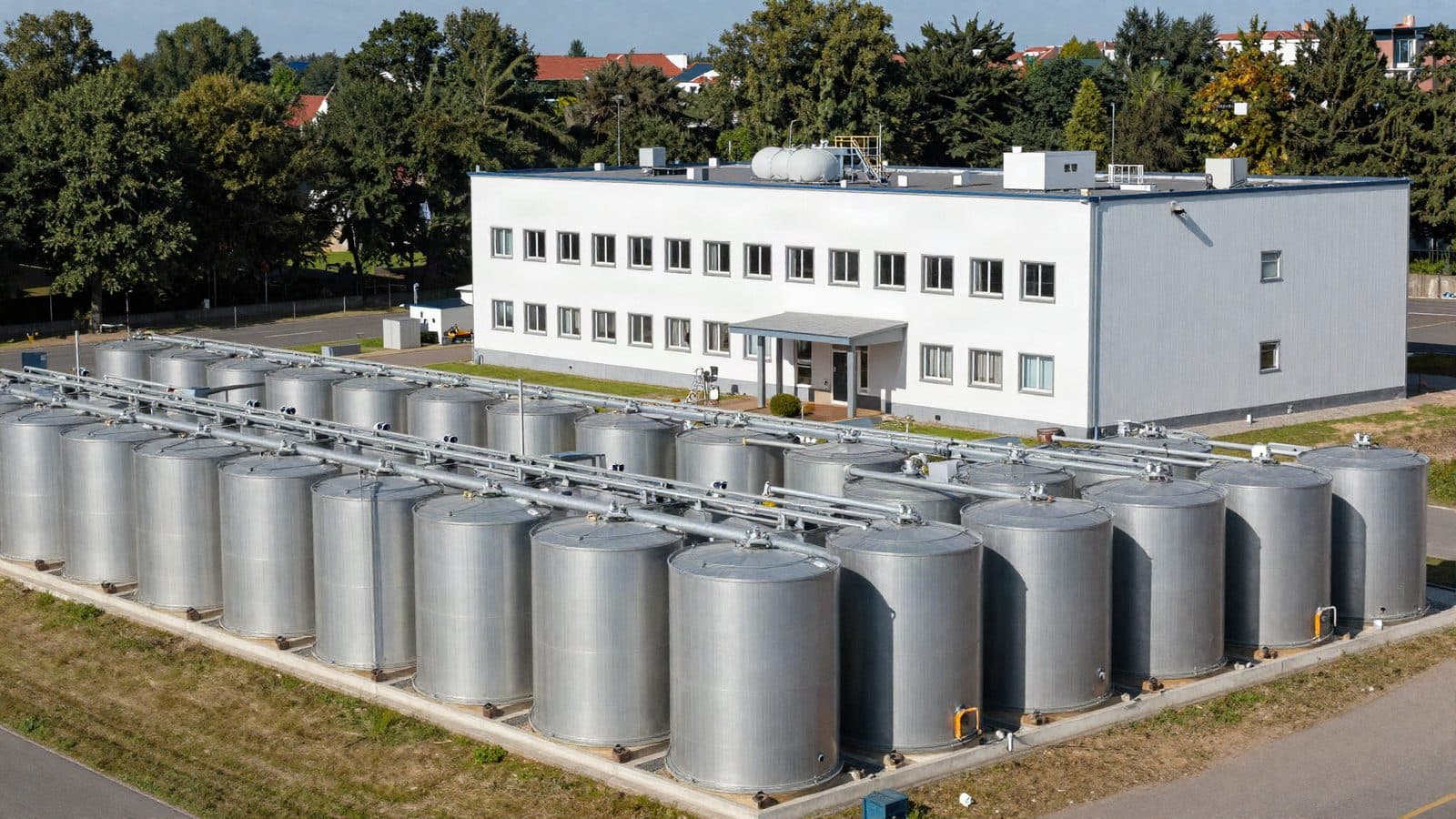
The Regulatory Landscape for BESS in Europe
Battery Energy Storage Systems (BESS) sit at the intersection of energy generation, grid infrastructure, and electricity markets — and every EU member state draws those boundaries differently. Some countries treat storage as a generation asset; others classify it as grid infrastructure. Some allow standalone BESS to participate in wholesale markets; others restrict batteries to co-located renewables. The result is a patchwork of rules that determines what revenue streams are available, what permissions are required, and how long it takes to get a project from concept to commercial operation.
For developers operating across multiple jurisdictions, this fragmentation creates both complexity and opportunity. Markets with mature frameworks — the UK, Germany — offer full market access but face intense competition and saturated grid connection queues. Markets still catching up — Cyprus, Greece — present less competition but require developers to navigate regulatory uncertainty and accept narrower initial revenue streams.
This article maps the regulatory landscape across six key European markets: Cyprus, Germany, Spain, Italy, Greece, and the UK. For each, we cover licensing requirements, permitted charging sources, market access, grid connection processes, and permitting timelines. The goal is practical: if you’re deciding where and how to deploy BESS in Europe, this is the comparison you need.
Why Regulation Matters More Than You Think
A BESS project’s bankability depends not on the battery chemistry or the EPC contract — it depends on the revenue model. And the revenue model is entirely shaped by regulation. Whether you can charge from the grid, participate in the Day-Ahead Market, or offer ancillary services determines your project’s IRR more than any hardware decision.
Cyprus: Where Things Stand
Cyprus is in the early stages of building a comprehensive energy storage regulatory framework. The foundations are in place — CERA oversees licensing, TSOC manages grid connections, and municipalities handle building permits — but significant gaps remain, particularly around market participation and standalone storage.
CERA Licensing
The Cyprus Energy Regulatory Authority (CERA) oversees all energy licensing on the island. BESS projects co-located with renewable energy sources require a Category B licence, which covers storage systems attached to an existing or new RES installation. The application process involves submitting technical specifications, grid impact studies, and environmental screening documentation.
Standalone BESS — systems not attached to a solar or wind farm — do not yet have a dedicated licensing pathway. CERA has indicated that standalone storage licensing is under development, but no formal framework has been published as of May 2026.
Charging Restrictions
Under the current regulatory framework, BESS in Cyprus can only charge from the co-located solar or wind installation. Grid charging — drawing power from the network to store and discharge later — is not permitted. This means BESS revenue in Cyprus is currently limited to curtailment recovery and time-shifting of co-located renewable generation. The arbitrage opportunity that drives BESS economics in the UK and Germany is not yet available.
Market Access
Day-Ahead Market (DAM) participation for BESS is under development by the Cyprus TSO (TSOC). Currently, BESS cannot independently bid into the wholesale electricity market. The ancillary services market — frequency response, voltage support — remains closed to storage. These market limitations are the most significant regulatory gap relative to other European markets.
Grid Connection & Permitting
Grid connection for BESS is managed by TSOC and requires full technical compliance with EN 50549-2 (the European standard for generating plants connected to MV/HV distribution networks). Equipment must carry TÜV or equivalent certification demonstrating conformity. The connection study and approval process typically takes 3–6 months.
Building permits are issued at the municipal level and require site plans, structural calculations, and fire safety assessments. Larger installations (>5 MW or >10,000 m² footprint) require an Environmental Impact Assessment (EIA) coordinated through the Department of Environment.
The Key Constraint
The single biggest regulatory limitation in Cyprus is the prohibition on grid charging. Without it, BESS can only capture curtailed energy from the co-located solar plant — a valuable function, but one that leaves the full arbitrage and ancillary services revenue stack untapped. Every other market in this comparison allows grid charging in some form.
The EU-Wide Comparison
How Cyprus stacks up against five other European markets across eight key regulatory dimensions.
| Aspect | Cyprus | Germany | Spain | Italy | Greece | UK |
|---|---|---|---|---|---|---|
| Standalone BESS licensing | Not available | Full framework | Since 2024 | Terna framework | Pilot phase | Mature |
| Co-located BESS | Category B | Standard | Hybridación | Standard | RAE licence | Standard |
| Grid charging allowed | Solar only | Full access | Full access | Full access | Partial | Full access |
| DAM participation | In development | EPEX Spot | OMIE | GME/IPEX | Limited | N2EX / EPEX |
| Ancillary services market | Not open | FCR / aFRR | Opening | MSD market | Not open | FFR / DC / DM |
| Capacity market | None | None | Proposed | Active | Planned | T-1 / T-4 |
| Permitting timeline | 6–12 mo | 12–24 mo | 18–36 mo | 18–30 mo | 12–24 mo | 6–12 mo |
| Grid connection process | TSOC applicationEN 50549-2 | DSO/TSO dualVDE-AR-N 4120 | REE applicationP.O. 12.2 | Terna processCEI 0-16 | ADMIE/DEDDIEGrid code v2 | NGESO/DNOG99 / G100 |
Most Mature Markets
UK and Germany lead with comprehensive regulatory frameworks that allow standalone BESS, full grid charging, wholesale market participation, and ancillary services revenue. The UK’s capacity market provides an additional revenue floor that significantly improves bankability.
The trade-off: intense competition, grid connection queues measured in years, and saturated ancillary services procurement rounds that have compressed margins.
Emerging Markets
Cyprus and Greece are the least developed in terms of BESS regulation, but this creates a window of opportunity. Permitting timelines are shorter, grid connection queues are manageable, and first-mover advantage is real.
The constraint: limited revenue streams today. But regulatory trajectories are clear — both countries are actively working toward full market integration.
What’s Coming for Cyprus
Cyprus is not standing still. CERA, TSOC, and the Ministry of Energy are actively developing regulatory reforms that will bring the island closer to European norms. Here’s the expected timeline based on published consultations, EU transposition deadlines, and industry engagement.
DAM Arbitrage Access (Grid Charging)
The most impactful upcoming change. TSOC is developing market rules that would allow BESS to charge from the grid and participate in the Day-Ahead Market. This unlocks the full arbitrage revenue stream — buying low during off-peak hours and selling high during evening peaks. Based on current DAM price spreads in Cyprus (€40–80/MWh differential), this could add €15,000–30,000 per MWh of installed capacity annually.
Ancillary Services Market Opening
TSOC is developing procurement mechanisms for frequency containment reserves (FCR) and automatic frequency restoration reserves (aFRR). BESS is uniquely suited to provide these services due to sub-second response times. Cyprus’s isolated grid makes frequency stability particularly valuable — potentially commanding premium pricing compared to interconnected markets.
Standalone BESS Licensing Framework
CERA is preparing a dedicated licensing category for standalone storage that is not co-located with renewable generation. This will enable grid-scale storage projects at optimal grid locations rather than being constrained to existing solar park sites. The framework is expected to build on lessons from the co-located Category B process.
Updated Grid Code for Storage
TSOC is revising the Transmission and Distribution Grid Codes to include storage-specific technical requirements, covering power quality, fault ride-through behaviour, and island-mode operation parameters. The updated codes will align with EN 50549-2 while addressing Cyprus-specific grid conditions.
EU Battery Regulation Alignment
The EU Battery Regulation (2023/1542) introduces sustainability requirements including carbon footprint declarations, recycled content minimums, and due diligence obligations. Cyprus must transpose these into national law. For developers, this means sourcing equipment from manufacturers that comply with the regulation’s traceability and sustainability provisions — a factor that favours established Tier-1 OEMs.
Practical Guide: What Developers Need Today
Navigating the current Cyprus BESS regulatory framework, step by step. This checklist applies to co-located BESS projects under the existing rules.
Secure Category B Licence from CERA
Submit a licence application to the Cyprus Energy Regulatory Authority specifying the BESS capacity (MW and MWh), the co-located RES installation details, and the intended charging/discharging profile. Include a technical description of the battery system, PCS specifications, and preliminary grid impact assessment. Timeline: 2–4 months for review and approval.
Obtain Grid Connection Agreement from TSOC
Apply to the Transmission System Operator of Cyprus for grid connection, providing detailed electrical single-line diagrams, protection relay settings, and reactive power capability curves. TSOC will conduct a connection impact assessment and issue connection terms. Timeline: 3–6 months including the technical study.
Ensure Equipment Meets EN 50549-2 (TÜV Certified)
All BESS equipment connected to the Cyprus grid must demonstrate compliance with EN 50549-2. This requires TÜV or equivalent third-party certification covering power quality, frequency response, fault ride-through, and anti-islanding protection. Ensure your OEM provides the required certificates before procurement — retrofitting non-compliant equipment is expensive and time-consuming.
Apply for Building Permit (Municipal Level)
Building permits for BESS installations are processed by the local municipality where the project is located. Submissions require architectural plans, structural calculations for foundations, fire safety assessments, and noise impact studies if the site is near residential areas. Timeline: 1–3 months depending on municipality.
Complete Environmental Screening
All BESS installations undergo environmental screening. Smaller projects (<5 MW) typically require only a preliminary assessment. Larger installations or those near Natura 2000 sites require a full Environmental Impact Assessment (EIA) coordinated through the Department of Environment. Timeline: 1–6 months depending on project scale and location sensitivity.
Install and Commission with Certified EPC Partner
Engage an EPC contractor with demonstrated experience in utility-scale BESS installation in Cyprus. The contractor should handle civil works, electrical installation, EMS/SCADA integration, and commissioning testing. Ensure the EPC contract includes performance guarantees, warranty pass-through from the OEM, and commissioning test protocols aligned with TSOC requirements.
Submit for Grid Connection Testing and Approval
After installation, TSOC conducts grid connection testing to verify compliance with the connection agreement terms. This includes protection relay testing, power quality measurements, frequency response verification, and anti-islanding tests. Successful completion results in a Connection Completion Certificate and permission to commence commercial operation.
Total Expected Timeline
From initial CERA application to commercial operation: 6–12 months for co-located BESS projects. This is shorter than most European markets because Cyprus processes permits at the municipal level (no federal bureaucracy) and TSOC handles a smaller queue of applications compared to larger TSOs. The key bottleneck is typically the grid connection study, which can take 3–6 months depending on grid capacity at the connection point.
Why the Regulatory Gap Is Actually an Opportunity
It’s tempting to look at the comparison table and conclude that Cyprus is a poor choice for BESS deployment. After all, no grid charging, no DAM participation, no ancillary services — that’s a limited revenue stack. But the developers who wait for regulatory perfection before deploying will find themselves late to a market that rewards early movers.
First-Mover Market Position
Cyprus has very limited installed BESS capacity today. Developers who deploy now establish relationships with TSOC, build a compliance track record, and position themselves for priority consideration when new market services open. Grid connection capacity is finite — early movers secure the best connection points before queues build.
Equipment Prices at Historic Lows
LFP battery container prices have dropped over 50% since 2023 and are currently at or near all-time lows. This pricing environment is driven by Chinese manufacturing overcapacity — a structural condition that won’t last as consolidation occurs. Locking in CAPEX now at these prices materially improves project IRR regardless of which revenue streams open later.
Curtailment Recovery Available NOW
Cyprus solar curtailment has reached 45% at some parks. Co-located BESS can capture this lost energy today, under the current regulatory framework, without waiting for DAM access or ancillary services. For parks already losing significant revenue to curtailment, BESS pays for itself on curtailment recovery alone — every future revenue stream is pure upside.
First-Mover Advantage in New Revenue Streams
When grid charging and ancillary services regulations arrive (expected 2027), installed capacity will have immediate access to new revenue streams. Developers who deploy in 2026 will have operational systems, proven performance data, and established TSOC relationships — all of which translate to preferential access when new market services launch.
“The best time to plant a tree was twenty years ago. The second best time is now. In Cyprus BESS, the best time to deploy was when curtailment hit 20%. The second best time is before regulations catch up and competition arrives. We’re building the infrastructure today that will capture tomorrow’s revenue streams.”
— Alexander Papacosta, Managing Director, Lighthief Cyprus
Navigate Cyprus BESS Regulations with Us
From CERA licensing to TSOC grid connection, we handle the regulatory complexity so you can focus on returns. Our team has navigated the permitting process for multiple parks across Cyprus.
Contact Alexander Papacosta: +357 99 164 158 | office@lighthief.com