Where We Are Today (2026)
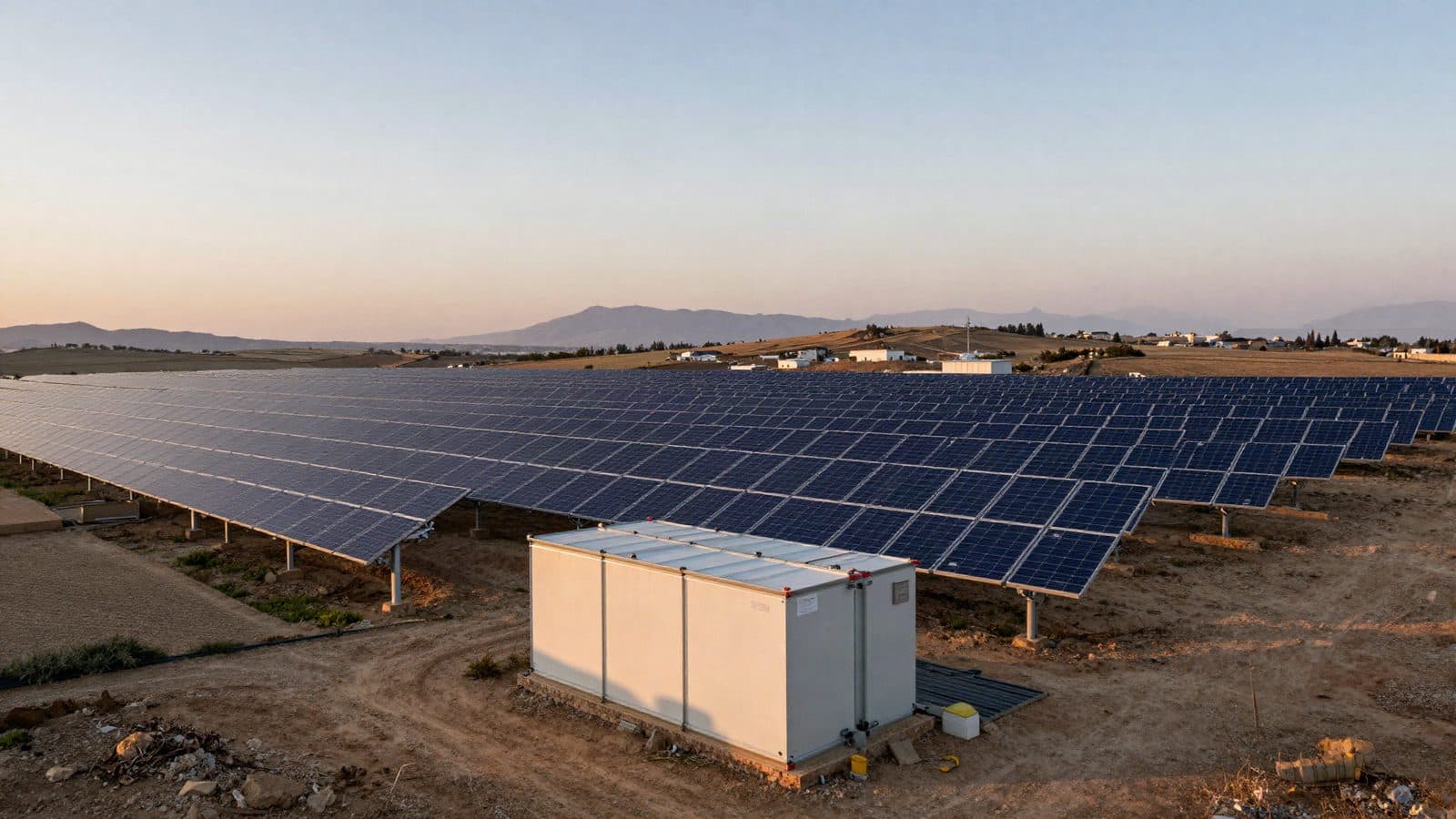
Cyprus sits at a remarkable inflection point. The island has approximately zero megawatts of operational grid-scale BESS — yet it has the EU's highest solar curtailment rate at 47%, the widest day-ahead price spreads in the Mediterranean, and a grid operator increasingly desperate for flexibility. Every condition for a storage boom is in place. The hardware simply hasn't arrived yet.
The Problem
A grid at breaking point
- 47% curtailment rate — nearly half of solar generation wasted
- No grid-scale BESS operational on the island
- No ancillary services market for batteries
- DAM access for BESS still under development
The Opportunity
First-mover advantage
- Lighthief's large-scale BESS portfolio will be among the first
- BESS equipment at historic low prices globally
- Curtailment recovery alone generates strong ROI
- Zero competition for grid services contracts
The inflection point: Cyprus is the only EU member state with over 40% solar curtailment and zero grid-scale battery storage. This gap won't last. The question isn't whether BESS will arrive — it's who will be operational when the market opens.
2027: The Infrastructure Year
2027 marks the year BESS transitions from planning to reality in Cyprus. The first wave of grid-scale installations — including Lighthief's portfolio — will be commissioned, and the day-ahead market will begin to accommodate battery participation. This is the year when early investors start earning.
Commissioning
First wave of BESS installations expected to be commissioned across Cyprus. Lighthief's large-scale BESS portfolio is planned to enter operation, becoming one of the largest distributed storage fleets in the Mediterranean.
DAM Access
Day-ahead market arbitrage legislation expected to pass, enabling BESS to buy electricity during low-price midday hours (€77/MWh) and sell during evening peaks (€186/MWh).
Curtailment
Curtailment expected to stabilise around 45–50% as more solar capacity continues to be installed. Recovery of curtailed energy remains the primary revenue stream for BESS operators.
Revenue model (2027): Curtailment recovery as the primary revenue stream, with early arbitrage participation as DAM rules are finalised. First-mover BESS operators will have the market essentially to themselves.
2028: Market Maturation
By 2028, Cyprus's energy storage market shifts from nascent to maturing. The ancillary services market opens, Frequency Containment Reserve (FCR) and automatic Frequency Restoration Reserve (aFRR) markets are established, and BESS operators can begin stacking multiple revenue streams for the first time.
Revenue Stacking Becomes Viable
Three concurrent revenue streams available to BESS operators
Stream 1Curtailment Recovery
The foundational revenue stream. Capture curtailed solar energy that would otherwise be wasted. Still contributes ~€400K/yr for a 5 MW / 20 MWh system.
Stream 2DAM Arbitrage
Buy low, sell high on the day-ahead market. The €77–186/MWh midday-to-evening spread creates substantial margin on every cycle. Adds €170–280K/yr.
Stream 3Grid Services
FCR, aFRR, and other ancillary services. BESS responds to frequency deviations in seconds — far faster than thermal plants. Premium pricing expected. Adds €250–600K/yr.
Second Wave Entrants
New investors enter the market
The demonstrated success of first-wave BESS installations triggers a second wave of investment. New entrants arrive — but they face higher equipment costs, longer permitting queues, and an increasingly competitive market for grid service contracts.
Standalone BESS Licensing
Regulatory evolution
Standalone BESS licensing expected — batteries no longer restricted to co-located solar parks. This expands the addressable market but also increases competition. Early co-located systems retain the advantage of dual revenue (curtailment + grid services).
2029–2030: The Interconnector Era
The EuroAsia Interconnector — a 2,000 MW subsea cable connecting Cyprus to Crete (Greece) and Israel — is expected to become operational during this period. This fundamentally changes the energy landscape, but it doesn't diminish the BESS case. It transforms it.
What the Interconnector Changes
What Improves
- International arbitrage: Access to European wholesale markets with cross-border price spreads
- Cross-border balancing: BESS can participate in pan-European frequency regulation markets
- Energy export: Excess renewable generation can flow to Greece, reducing waste
- Grid stability: Interconnection support reduces frequency volatility
What Shifts
- Curtailment decreases: Energy can be exported rather than curtailed, reducing one revenue stream
- Revenue pivots: From curtailment recovery to arbitrage (international price spreads) and grid services (cross-border balancing)
- Competition increases: More market participants, but total addressable market also grows significantly
- Early investors benefit: 3+ years of revenue head start. Systems already at or near payback by the time the market changes
The key insight: Early BESS investors don't need the interconnector. They earn strong returns from curtailment recovery alone during 2027–2028. By the time the interconnector arrives, their systems are already paid off or close to payback — and they're positioned to capture the new revenue streams it creates.
Revenue Evolution Timeline
The table below illustrates how revenue evolves for a typical 5 MW / 20 MWh BESS system installed in 2026–2027. Each phase adds new revenue streams while maintaining existing ones, creating a compounding effect over time.
Curtailment Recovery
Foundation revenue stream
- Recover curtailed solar energy (47% curtailment rate)
- Store during midday curtailment, discharge at evening peak
- No regulatory dependency — revenue begins at commissioning
+ DAM Arbitrage
Market participation begins
- Curtailment recovery continues as base revenue
- Day-ahead market arbitrage: buy at €77/MWh, sell at €186/MWh
- Dual cycling strategy maximises 4-hour battery capacity
+ Grid Services
Full revenue stacking
- FCR and aFRR ancillary service contracts
- Capacity payments for peak demand reduction
- Premium pricing on isolated grid where alternatives are limited
International Markets
Revenue transformation
- International price spread arbitrage replaces curtailment
- Cross-border balancing markets open new revenue pools
- Total addressable market grows with European market access
Compounding Revenue
A 5 MW / 20 MWh BESS system installed at ~€2.26M in 2026–2027 earns back its full CAPEX within 4–5 years from curtailment recovery alone. When arbitrage and grid services are added, the payback period compresses further, and lifetime revenue over 15–20 years could exceed €10M — a 4–5x return on the initial investment.
What This Means for Early Movers
The 2026–2027 window represents a rare convergence of conditions that maximise returns for BESS investors. Equipment prices are at historic lows, curtailment is at historic highs, and competition is effectively zero. This combination will not last.
The Early-Mover Window
Why 2026–2027 investors capture maximum returns
Equipment Costs
Global BESS prices at historic lows due to manufacturing overcapacity in China. LFP battery cells at < US$50/kWh. This floor won't hold as demand accelerates globally.
Curtailment
47% curtailment rate means nearly half of every MWh generated by your solar park is wasted. BESS captures this lost revenue immediately — no legislation required.
Zero Competition
No other grid-scale BESS is operational in Cyprus. When grid service contracts open, early operators will negotiate from a position of scarcity — commanding premium pricing.
Early Movers (2026–2027)
Maximum advantage
- Lowest equipment costs in BESS history
- Immediate curtailment recovery revenue from day one
- First-mover access to grid service contracts
- 3+ years of revenue before market becomes competitive
- Systems near payback when interconnector arrives
Later Entrants (2029+)
Viable but reduced advantage
- Higher equipment costs as global demand increases
- More competition for grid service contracts
- Lower curtailment as interconnector reduces waste
- Still viable business case, but longer payback period
- International market access compensates partially
Risks and Uncertainties
No investment roadmap is complete without an honest assessment of what could go differently. We identify four key uncertainties — and explain why none of them eliminate the BESS investment case. They shift the timing and revenue mix, but the fundamental economics remain robust.
EuroAsia Interconnector Delays
The cable has been delayed multiple times. Further delays would actually benefit early BESS investors by extending the high-curtailment period and the window of zero competition for grid services.
Regulatory Pace
Ancillary service markets and DAM access could take longer than expected to establish. However, curtailment recovery requires no regulatory change — it works under current rules and provides the base-case return.
Technology Evolution
Solid-state batteries may reach commercial scale by 2030, offering higher density and longer life. But today's LFP systems with 7,000-cycle warranties and 15–20 year lifespans will still be generating revenue well into the 2040s.
Economic Conditions
Cyprus's economic performance, electricity demand growth, and energy policy priorities could shift. Energy storage, however, is structural — the grid needs flexibility regardless of economic cycles, and EU renewable mandates provide regulatory certainty.
Our assessment: These risks affect the trajectory of returns, not the existence of returns. A BESS investment in Cyprus earns a strong return from curtailment recovery alone, even if every other market development is delayed by two years. The roadmap scenarios above represent the upside — and the upside is substantial.
Data Sources & Assumptions
- Cyprus TSO (TSOC) — Historical curtailment data and grid capacity figures (2025–2026)
- Lighthief operational data — 47% average curtailment from 5.01 MW reference park
- ENTSO-E — Ancillary service revenue benchmarks from EU balancing markets (Germany, Ireland, UK)
- EuroAsia Interconnector project — Published timeline and capacity specifications (2,000 MW)
- Lighthief EPC Confirmed Adders v4 — Installed cost of ~€113K/MWh (portfolio average), February 2026
- Revenue projections use conservative assumptions: 95% availability, single daily cycle for arbitrage, 47% curtailment rate
Position Your Investment for 2027–2030
The window for maximum BESS returns in Cyprus is open now. Equipment costs are at historic lows, curtailment is at historic highs, and competition is zero. Let us show you how to capture the full roadmap of revenue.
Contact Alexander Papacosta: +357 99 164 158 | office@lighthief.com