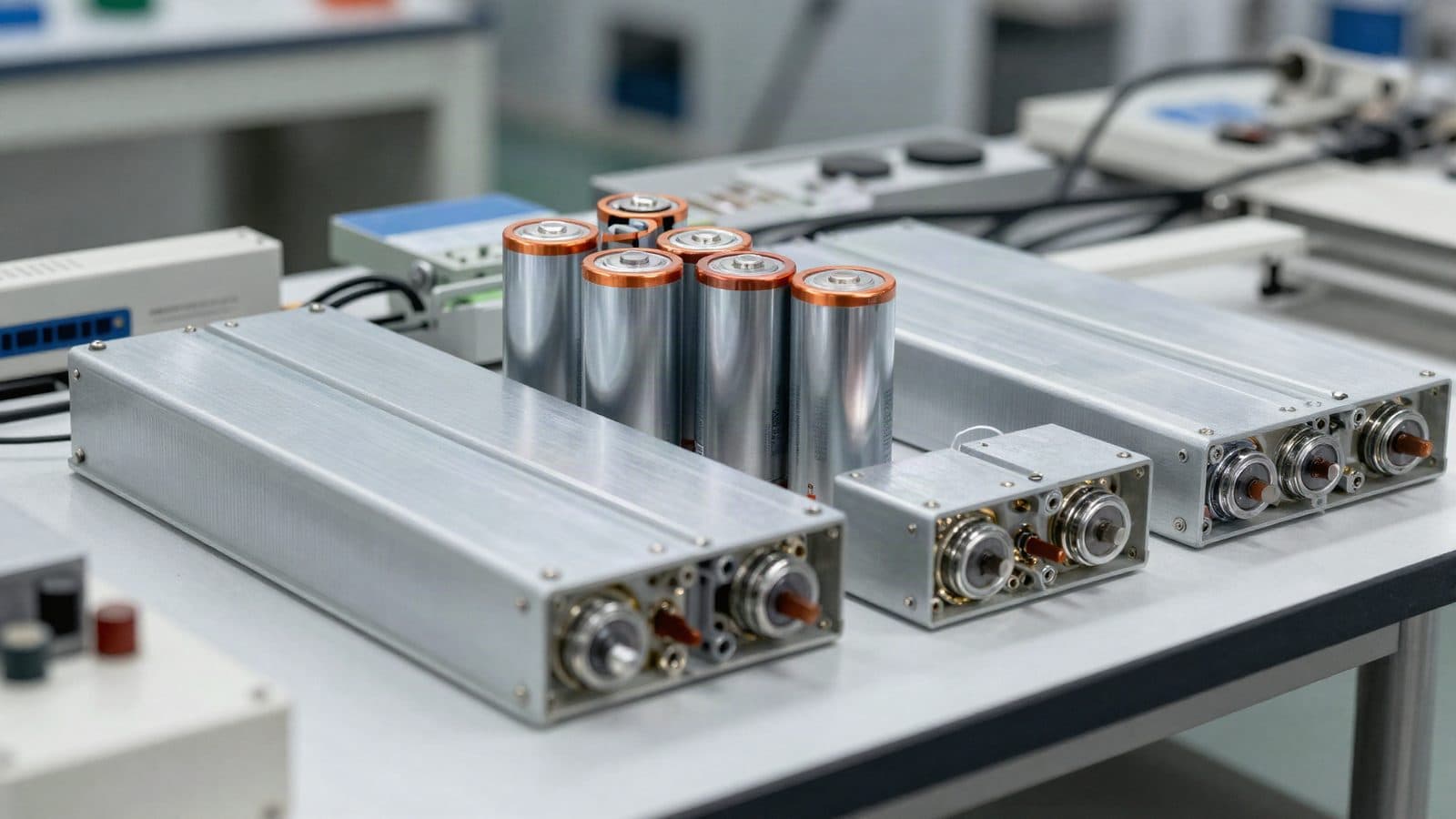
The Lithium Price Collapse: What Happened
The story of BESS viability is fundamentally a story about lithium. Lithium carbonate — the key raw material for both LFP and NMC battery cells — experienced one of the most dramatic commodity price collapses in recent history.
Between 2020 and late 2022, surging demand from electric vehicles and grid storage combined with supply constraints to push lithium carbonate from ~$6,000/tonne to a peak of $81,000/tonne in November 2022. Then the market corrected — violently.
Lithium Carbonate Price Trajectory
Why did lithium crash? Massive new mining capacity came online in Australia, Chile, and China — while EV sales growth moderated from exponential to merely rapid. Supply overshot demand. The result: battery-grade lithium is now cheaper than at any point since the EV revolution began.
From Lithium to System Cost: How the Savings Flow Through
Lithium accounts for approximately 30–40% of the cost of an LFP battery cell. When lithium prices collapse, cell prices follow — and system-level costs cascade downward through the entire BESS supply chain.
| Cost Component | 2022 (Peak) | 2025–26 | Change |
|---|---|---|---|
| LFP Cell ($/kWh) | $135–$160 | $48–$62 | −60% |
| Battery Module ($/kWh) | $180–$220 | $65–$85 | −62% |
| Containerised System ($/kWh) | $280–$350 | $105–$140 | −58% |
| Turnkey Installed ($/kWh) | $400–$500 | $140–$200 | −60% |
The numbers tell a striking story. In 2022, a turnkey 5 MW / 20 MWh BESS installation would have cost $8–$10 million. Today, the same system costs $2.8–$4 million. That's a 60% reduction in just three years.
And critically, the cost reductions are structural, not temporary. Chinese LFP manufacturers (CATL, BYD, EVE Energy, Linyang) have built enormous production capacity that keeps cell prices low even as demand grows. BloombergNEF projects LFP cell prices will stabilise between $45–$65/kWh through 2028.
The Financial Tipping Point: When BESS Payback Went Under 5 Years
For most investors, the magic number is 5 years. A BESS system that pays back within 5 years and then generates pure profit for the remaining 10–15 years of its warranty period is a compelling investment by any standard. The lithium crash pushed BESS past this threshold in 2024–2025.
The maths is straightforward. When system costs were $400–$500/kWh, a 20 MWh system cost $8–$10M. Even with strong curtailment revenue, payback exceeded 10 years — too long for most project finance. At $140–$200/kWh, the same system costs $2.8–$4M, and payback drops to 4–5 years in high-curtailment markets.
How Lithium Prices Drive BESS Payback
| Scenario | System Cost | Payback | Investor Verdict |
|---|---|---|---|
| 2022 Peak ($81K/t lithium) | $400–$500/kWh | 10–15 years | Not viable |
| 2023 ($30K/t lithium) | $220–$300/kWh | 7–9 years | Marginal |
| 2024–25 ($10K/t lithium) | $140–$200/kWh | 4–5 years | Highly viable |
| Current (<$10K/t lithium) | $130–$180/kWh | 3.5–4.5 years | Exceptional |
Payback assumes 40–50% curtailment, €175/MWh blended discharge price, LFP chemistry. Actual payback varies by market, curtailment rate, and grid pricing.
The implication for solar park owners: every month you wait to add BESS is a month of curtailed revenue permanently lost. At current lithium prices, the investment case is the strongest it has ever been — and may ever be. There is no financial argument left for delaying.
The Global BESS Market Is Exploding
The market has noticed. Global utility-scale BESS deployment is growing at extraordinary rates, driven almost entirely by the economics enabled by cheap lithium.
Global Deployment
Utility-scale BESS capacity added per year
Market Leaders
BESS deployment by region (2024–25)
BloombergNEF projects the global BESS market will exceed $120 billion annually by 2030, up from approximately $35 billion in 2024. The compound annual growth rate of ~25% is driven by the same force: lithium prices have made BESS economics work in virtually every market where solar curtailment or price arbitrage exists.
Why Island Grids Like Cyprus Benefit Most
The lithium price crash has made BESS viable in most solar markets. But it has made BESS exceptionally compelling in isolated grid markets like Cyprus, for three reasons:
Extreme Curtailment = Higher Revenue Per MWh Stored
Cyprus curtails 47% of solar production — the highest rate in the EU. Every MWh your BESS captures was going to be wasted. The “charge cost” is literally €0. In interconnected markets, BESS must buy energy at market prices to charge. In Cyprus, curtailed solar is free fuel.
Wide Price Spreads = Higher Revenue Per Cycle
Cyprus DAM prices average €102/MWh at midday and €184/MWh at evening peak — an €82 spread. Isolated grids without interconnection tend to have wider price spreads than interconnected markets, where arbitrage equalises prices across borders. This spread directly increases BESS revenue per cycle.
No Export Alternative = Storage Is the Only Option
Spain can export surplus solar to France. Germany can send it to Denmark. Cyprus has zero interconnection. Until the EuroAsia Interconnector arrives (2029+), BESS is the only way to monetise curtailed energy. This creates a captive demand environment that doesn't exist in mainland Europe.
The result: at current lithium-driven BESS prices, a 5 MW solar park in Cyprus with 47% curtailment achieves payback in approximately 4 years — compared to 7–8 years in interconnected EU markets with lower curtailment and narrower spreads. Cyprus is arguably the single best BESS market in Europe right now.
The Window of Opportunity: Why Timing Matters
Lithium prices may not stay this low forever. Several forces could push prices higher in the medium term:
Upside Risks to Lithium Prices
Downside Risks (Prices Stay Low)
The consensus among energy analysts (BNEF, Wood Mackenzie, IEA) is that lithium prices will remain in the $8,000–$15,000/tonne range through at least 2027. This suggests BESS prices will remain at historically attractive levels for the next 2–3 years. After that, increasing demand from both EVs and grid storage could push prices moderately higher.
The message is clear: BESS equipment is at or near its cheapest point in history. Curtailment in Cyprus is at its peak. The combination of historically low CAPEX and historically high lost revenue creates an investment window that may not remain open indefinitely. Early movers lock in today's prices; late movers pay whatever the market charges in 2028.
What This Means for Your Solar Park
Whether you own a 1 MW commercial installation or a 10 MW utility-scale park, the lithium price revolution has fundamentally changed the BESS investment equation:
Before (2022–2023)
- ×BESS CAPEX too high for sub-7-year payback
- ×Banks reluctant to finance — technology risk too high
- ×Insurance premiums elevated due to limited track record
- ×Curtailment lower (13–29%) — less revenue to recover
Now (2025–2026)
- BESS CAPEX at historic lows — 60% below 2022 peak
- Banks actively financing BESS — proven technology
- Insurance market mature — competitive LFP premiums
- Curtailment at 47% — massive revenue recovery potential
The alignment of cheap lithium, high curtailment, wide price spreads, and mature financing/insurance infrastructure creates a once-in-a-cycle investment opportunity. This is not a speculative bet on future technology — it's deploying proven, bankable hardware at the best price the market has ever offered.
Lock In Today's BESS Prices Before the Window Closes
Lithium-driven BESS pricing is at historic lows. Curtailment revenue recovery is at historic highs. We can model your specific park's economics and show you exactly what BESS adds to your bottom line.
Whether you have one park or twenty, our team will deliver a detailed financial assessment using your actual curtailment data and current market pricing.
Contact Alexander Papacosta: +357 99 164 158 | office@lighthief.com