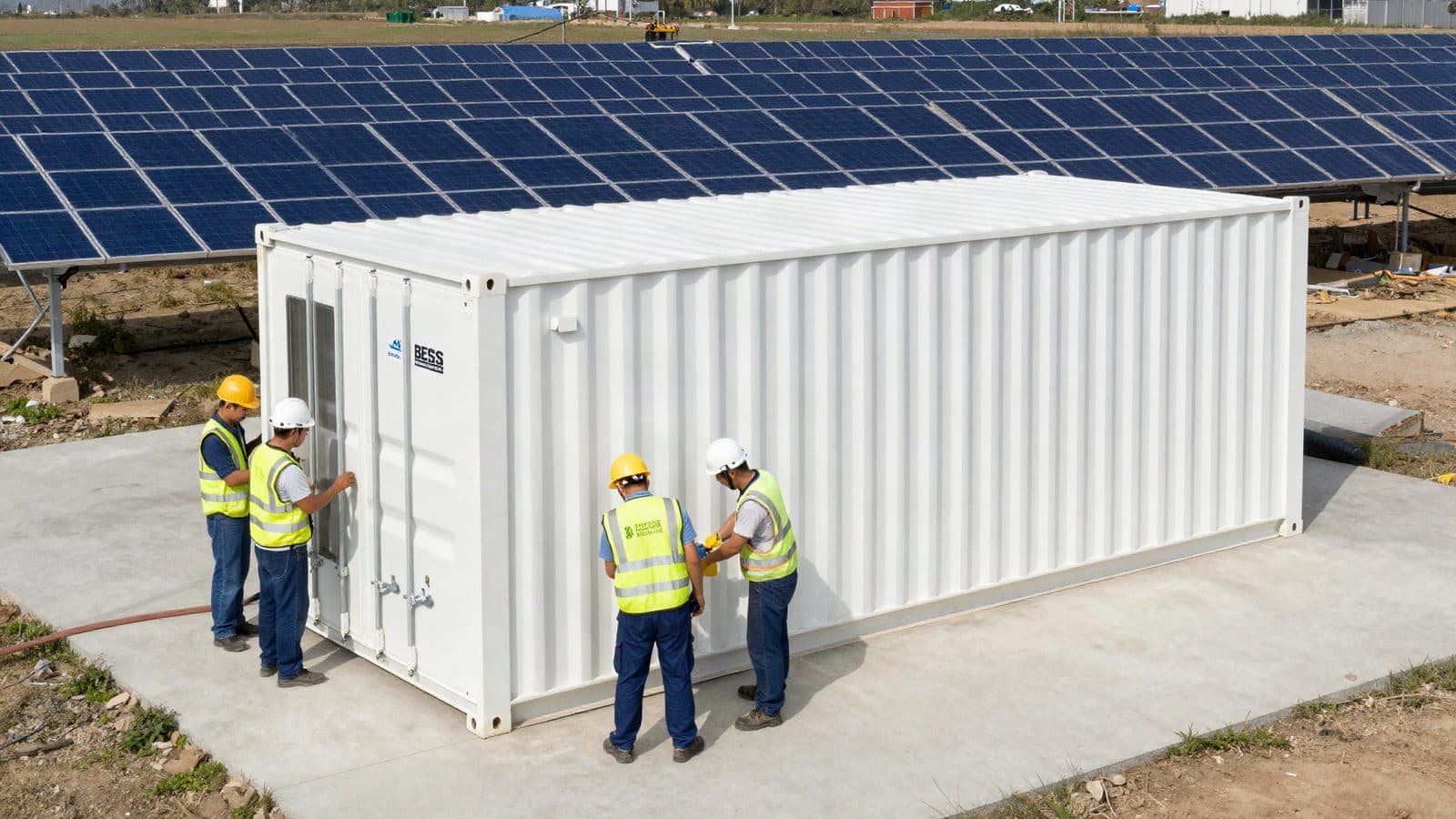
The Pattern Nobody Talks About
In large-scale BESS projects, the same patterns appear again and again. Loose terminations. Water in cable trays. Incorrect torque settings. “Let’s fix it during commissioning.”
None of this sounds dramatic. But under load, heat, and vibration, small workmanship gaps turn into system risk. A termination that passed visual inspection at 20°C develops hot spots at full discharge current. A cable entry that looked sealed during a dry installation lets moisture in during the first winter storm. A grounding bond that measured fine on day one degrades because the surface preparation was inadequate.
BESS projects rarely fail because of chemistry. They fail because execution gaps hide between responsibilities.
50%+
of BESS failures occur in the first 2 years
Year 1–2
peak failure period — construction, not degradation
30%
of early failures traceable to torque-related defects
The Interface Problem
Here is the uncomfortable truth: most of these issues do not belong clearly to one discipline.
Civil says the slab is fine. Electrical says the wiring is complete. The OEM says the container left the factory fully tested. But nobody truly owns the interface.
The cable entry. The grounding bond. The torque protocol. The drainage detail at the container base. These are the points where three or four scopes of work meet — and where quality falls through the cracks.
Civil Execution Issues
Surface first, get dismissed as cosmetic
- Poor slab drainage — water pools at container bases, corrodes cable entries over 6–12 months
- Foundation levelness out of tolerance — causes racking stress on internal busbars
- Cable trench backfill compaction — settlement cracks conduit seals later
- Missing drip edges or weather barriers at cable penetrations
Electrical Workmanship Issues
Hidden until thermal cycling exposes them
- Inconsistent torque on busbar connections — no protocol, or protocol not witnessed
- Crimps done with wrong die size — passes visual inspection, fails under load
- Grounding daisy-chained instead of star-configured per OEM spec
- Fibre optic BMS cables bent below minimum radius — intermittent comms faults
Why Solar Farm Sites Are Particularly Exposed
Retrofitting BESS onto existing solar farms introduces additional risk factors that greenfield installations do not face. The existing site infrastructure was designed for PV — not for 43-tonne BESS containers with high-voltage DC systems, liquid cooling, and fire suppression.
In Cyprus, the combination of 45°C summer ambient temperatures, coastal salt spray exposure, and winter storm rainfall creates an environment where marginal workmanship degrades faster than it would in a temperate climate. A loose termination that might survive 5 years in Germany develops a hot spot within 6 months in Limassol.
Thermal Stress
Daily temperature swings of 30°C+ cause thermal expansion cycles that loosen connections over weeks, not years
Water Ingress
Poorly sealed cable entries and inadequate drainage allow moisture to reach DC connections — accelerating corrosion and arc risk
Salt Corrosion
Island geography means salt spray affects even inland sites. C5-rated enclosures protect the container — not the interfaces
Five Protocols That Prevent Early-Life Failures
The fix is not more inspections. It is fewer gaps in ownership. These five protocols, applied consistently during every BESS installation on a solar farm site, eliminate the most common root causes of early-life failures.
Interface Ownership Matrix
Before construction starts, map every physical interface — cable entry, grounding bond, drainage detail, HVAC penetration — to a single named person. Not a discipline, not a company. A person who signs off that specific interface.
Why it works: When a cable entry is nobody’s responsibility, it gets sealed by whoever finishes last. When it belongs to a named engineer, it gets sealed correctly.
Torque Witness Protocol
Every critical connection torqued to OEM specification, marked with torque-indicating paint, photographed with a timestamped image, and logged in the project record. Two-person witness for all busbar and MV terminations.
Why it works: This single protocol eliminates an estimated 30% of early-life electrical failures. A torqued-and-marked connection creates accountability and a verifiable record.
Pre-Energisation Walk-Down
Not a punch list. A structured, interface-by-interface inspection with the named owner of each interface point, conducted before any load is applied. Every cable entry, every grounding bond, every drainage path, every seal.
Why it works: Commissioning is too late to find workmanship defects. Under energisation pressure, there is always an incentive to defer — “let’s fix it during O&M.” The walk-down is the last gate before that incentive takes over.
48-Hour Thermal Soak Test
Before handover, run the system under full charge/discharge cycles for 48 hours continuously. Thermal imaging of all connections at hour 0, hour 24, and hour 48. Any connection that develops a hot spot under thermal cycling is reworked before PAC.
Why it works: Cold-check torque verification catches about 70% of loose connections. The other 30% only show up once thermal expansion cycles begin. Two days of soak testing catches them before the client does.
As-Built Drainage Verification
Run water through every cable tray, every trench, every container base penetration. If water pools at any point, resolve it before energisation. Document the test with video evidence showing water flow direction and drainage clearance at every interface point.
Why it works: Drainage failures are invisible until the first heavy rain. In Cyprus, that may be 4–6 months after a summer installation — well past the point where civil works crews have demobilised.
The Real Lesson
The failure is not in the battery. It is in the space between contracts.
A BESS container leaves the factory fully tested. The civil foundation meets its design spec. The electrical installation follows the single-line diagram. Each package, taken alone, is compliant. But the system is only as reliable as its weakest interface — and interfaces live between packages.
If you want reliability, own the interfaces, not just the packages. That means having an EPC integrator or owner’s engineer whose explicit scope is the boundary between every discipline — and who has the authority to hold all parties accountable at those boundaries.
Key Takeaways
- The majority of BESS failures in years 1–2 are construction defects, not battery degradation.
- Interface points — where civil, electrical, and OEM scopes meet — are the highest-risk areas on any BESS site.
- A torque witness protocol alone eliminates ~30% of early-life electrical failures.
- Pre-energisation walk-downs and 48-hour thermal soak tests catch defects that cold inspections miss.
- Cyprus’s climate — extreme heat, salt spray, and seasonal rain — accelerates every workmanship gap.
- Own the interfaces, not just the packages. Assign a named person to every boundary point.
How We Handle This at Lighthief
As the EPC integrator for our portfolio, we own every interface between the OEM container, the civil contractor, and the electrical installer. Our internal service manual includes mandatory torque witness protocols, pre-energisation walk-downs, thermal soak testing, and drainage verification for every BESS installation across our 51-park portfolio.
We do not subcontract interface management. If a cable entry sits between the civil and electrical scope, it is ours to inspect, verify, and sign off. That is the only way to guarantee that workmanship gaps do not become warranty claims — or worse, safety incidents.
Adding BESS to Your Solar Farm?
Installation quality determines whether your BESS delivers reliable returns or becomes a maintenance liability. Talk to us about how we manage construction risk across our portfolio — and how we can apply the same standards to your project.