The Simple Version: An Orchestra and Its Conductor
Imagine the electricity grid as an orchestra. Every generator has to play in perfect time — the same rhythm (frequency) and the same volume (voltage). If anyone drifts, the music falls apart.
Grid-Following = a musician
A grid-following battery listens to the conductor and plays along. It is excellent at its job — but it cannot play alone. If the conductor stops (the grid goes down, or gets too weak), the musician falls silent. It follows; it cannot lead.
Grid-Forming = the conductor
A grid-forming battery can be the conductor. It sets the rhythm and volume itself, holds the whole orchestra steady, and can even start the music from silence. When the grid wobbles, it pushes back instantly — just like a heavy spinning power-station turbine.
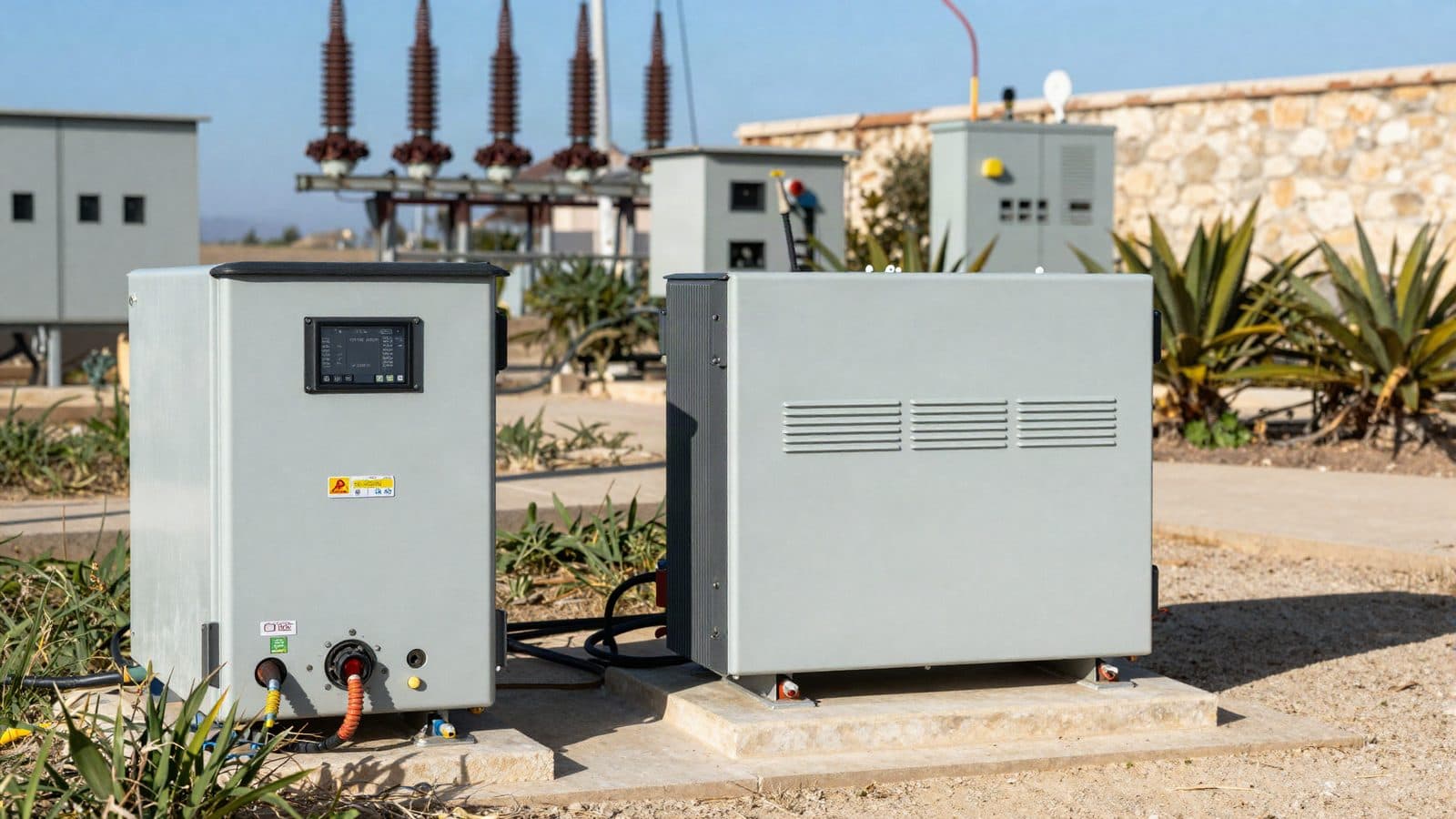
Here is the part that surprises most park owners: it is usually the same hardware.The transformer, the switchgear, the battery containers — identical. The difference lives in the inverter's control software. A grid-forming system simply knows how to lead as well as follow.
Side by Side
| What it does | Grid-Following | Grid-Forming |
|---|---|---|
| Needs a live grid to work? | Yes — it trips if the grid fails | No — it can stand on its own |
| Provides grid stability (inertia)? | No | Yes — synthetic inertia, instantly |
| Can restart a blacked-out network? | No | Yes — black-start capable |
| Works on weak / remote grids? | Struggles | Designed for it |
| Future ancillary-service revenue? | Limited | Full access |
| Extra hardware cost? | — | Typically ~5% on the inverter, often none |
Why This Matters More in Cyprus Than Anywhere in Europe
Cyprus runs the EU's only fully isolated electricity grid. There are no interconnector cables to lean on, so the island has to keep itself perfectly balanced, second by second, entirely on its own.
For decades that balance came from the spinning mass of conventional power stations — giant turbines whose sheer inertia naturally resists sudden changes. But as those plants retire and solar floods the grid, that natural stability disappears. Solar panels and ordinary (grid-following) batteries provide no inertia at all. The grid becomes twitchy, and the operator has to scramble to keep the lights on.
This is where grid-forming batteries become essential, not optional. They put inertia back into the system electronically — the same steadying effect as a spinning turbine, delivered in milliseconds. On an island grid, that is exactly the service the system operator will need to buy. And they can only buy it from assets that can provide it.
The Revenue Angle: Don't Lock Yourself Out
Today, most Cyprus BESS revenue comes from two streams: recovering curtailed solar and shifting cheap midday energy into the expensive evening peak. Those are real and they are here now. But the bigger, more durable money arrives when the system operator opens its ancillary-services markets — paying batteries to keep the grid stable. That transition is on the roadmap for 2027–2030.
FCR
Frequency Containment Reserve
The grid's fast-reflex service: respond to a frequency dip within seconds. On other island grids this has earned operators €30–80k per MW per year.
aFRR
automatic Frequency Restoration Reserve
The follow-up service: over a few minutes, gently push frequency back to exactly 50.0 Hz on the operator's automatic signal. A steady, contracted income layer on top of trading.
Inertia & Black-Start
Grid-forming only
Synthetic inertia and the ability to restart a dead grid. These services are physically impossible for a grid-following battery — only grid-forming systems qualify.
The trap: install a cheaper grid-following-only system today, and when these markets open you may be locked out of the most valuable ones — or facing an expensive equipment swap. A 15–20 year asset should be ready for the grid it will live in, not just the grid of today.
The Best Part: You Don't Have to Choose at Install
A common worry is: “If the grid operator only wants a simple grid-following connection now, do I lose grid-forming forever?” No. A properly specified modern system does both, and switches between them.
Connect in grid-following mode. Energise the plant, pass the operator's tests, start earning from day one — the simple, familiar setup.
Flip to grid-forming when the time comes. When the operator's rules or markets call for it, the same units switch to grid-forming through a software setting — no new boxes, no rebuild.
Capture the new revenue. The asset is already qualified to provide inertia and grid services — you simply turn the capability on.
The trick is to specify it correctly before you order. The capability has to be built in and certified from the start — you cannot bolt real grid-forming onto a battery that was never designed for it.
What to Check Before You Buy
Plenty of vendors say “grid-forming ready.” Ask for proof, not adjectives. A genuine grid-forming system can show you:
Multiple operating modes
The inverter datasheet should list grid-forming modes (often called VSG and VF) and black-start — not just standard grid-tied operation.
A recognised grid-code certificate
Independent type-test certification to the European standard EN 50549 proves the capability is real and lab-verified.
An off-grid voltage spec
If it can create its own stable voltage off-grid, it can form a grid. If that spec is missing, it probably cannot.
A black-start procedure
A written sequence for restarting a dead network — evidence the feature exists in practice, not just on a brochure.
Frequency-response test results
Proof the system reacts to frequency changes (droop response), the foundation of every grid service.
A smart control system (EMS)
The site controller must be able to switch modes and respond to the operator’s signals — capability is wasted without it.
What We Deploy
The systems we supply for Cyprus solar parks are built on grid-forming power conversion systems (Kehua C-series), type-tested to the European EN 50549 standard. They support the full set of modes — standard grid-following for day-one operation, plus virtual synchronous generator and black-start for everything that comes next.
In other words: your park earns from curtailment recovery and arbitrage now, and is already qualified for the grid-stability markets when they open. No second purchase, no missed window.
Make Sure Your Battery Is Ready for the Next Decade
A BESS is a 15–20 year asset. Specifying grid-forming from the start costs little — and protects every future revenue stream the island grid will create.
We will review your project, your connection terms, and your revenue plan, and tell you exactly what to specify so you are never locked out.
Contact Alexander Papacosta: +357 99 164 158 | office@lighthief.com