

C&I solar in Cyprus: daytime load, off-grid, and net billing with ESS
If your site consumes power while the sun is up, rooftop PV cuts the EAC bill directly. Industrial self-consumption is designed for payback under two years. Off-grid and net-billing-plus-storage cover the sites that do not match a pure daytime factory curve.
Three C&I delivery models
Farm-scale merchant parks target 8–12% equity IRR. Behind-the-meter C&I is a different product: it offsets the retail tariff you already pay.
Industrial daytime consumption
Typically under 2 years
Factories, cold stores, and warehouses that run in daylight displace retail EAC kWh hour-for-hour. No wholesale price risk — the return is the bill you stop paying.
- Highest IRR when the load curve matches the solar curve
- Metal roofs and carports, 50 kWp to multi-MW
- In-house EPC, grid application, and O&M
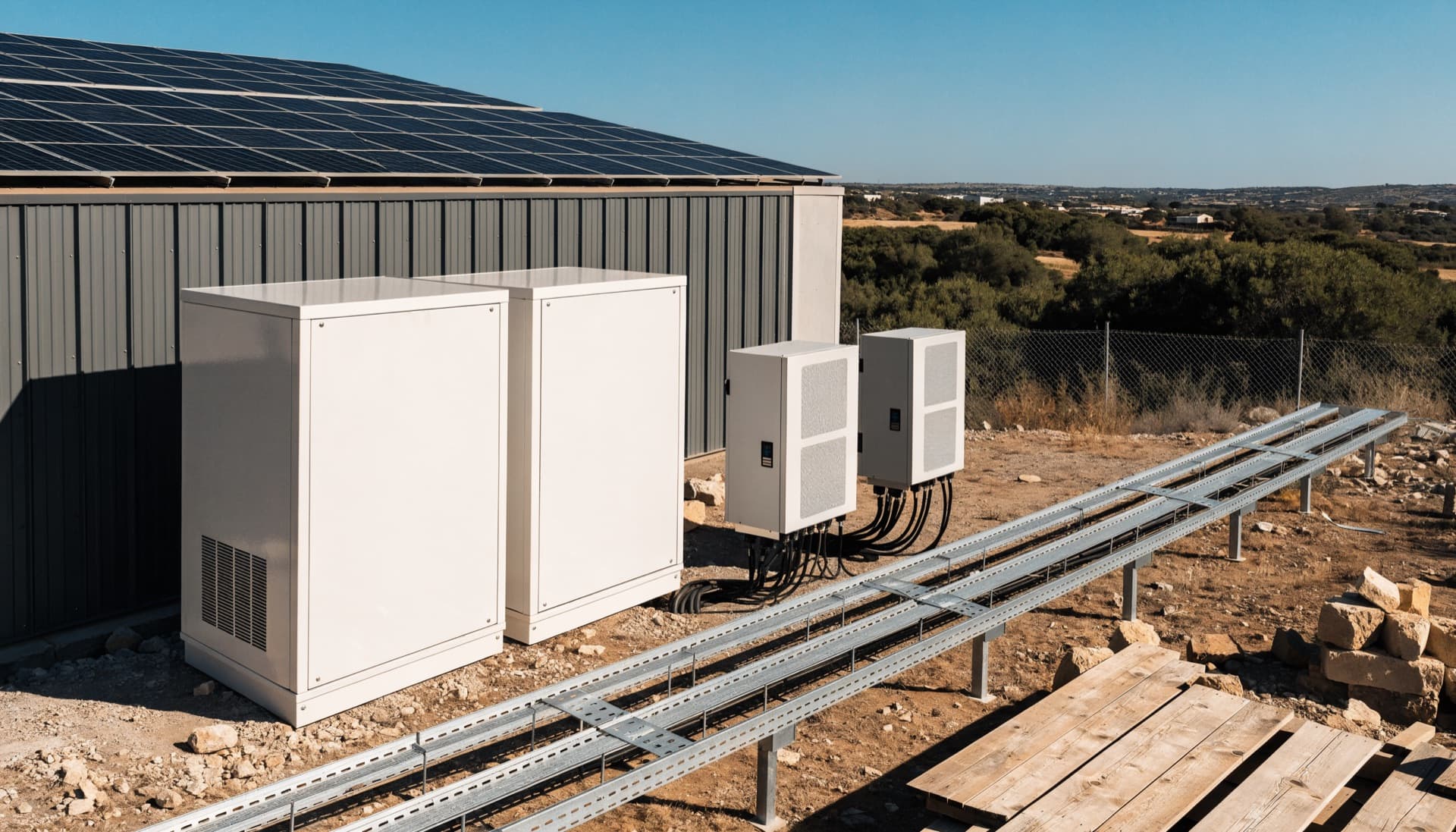
Off-grid and weak-grid sites
Diesel displacement from month one
Remote industrial sites, agricultural processing, and venues without a firm grid connection. PV + LFP storage replaces generator runtime during solar hours and covers essential overnight load.
- Hybrid inverters with generator integration
- LFP ESS sized to critical circuits, not the whole site
- No TSOC queue for behind-the-meter islands
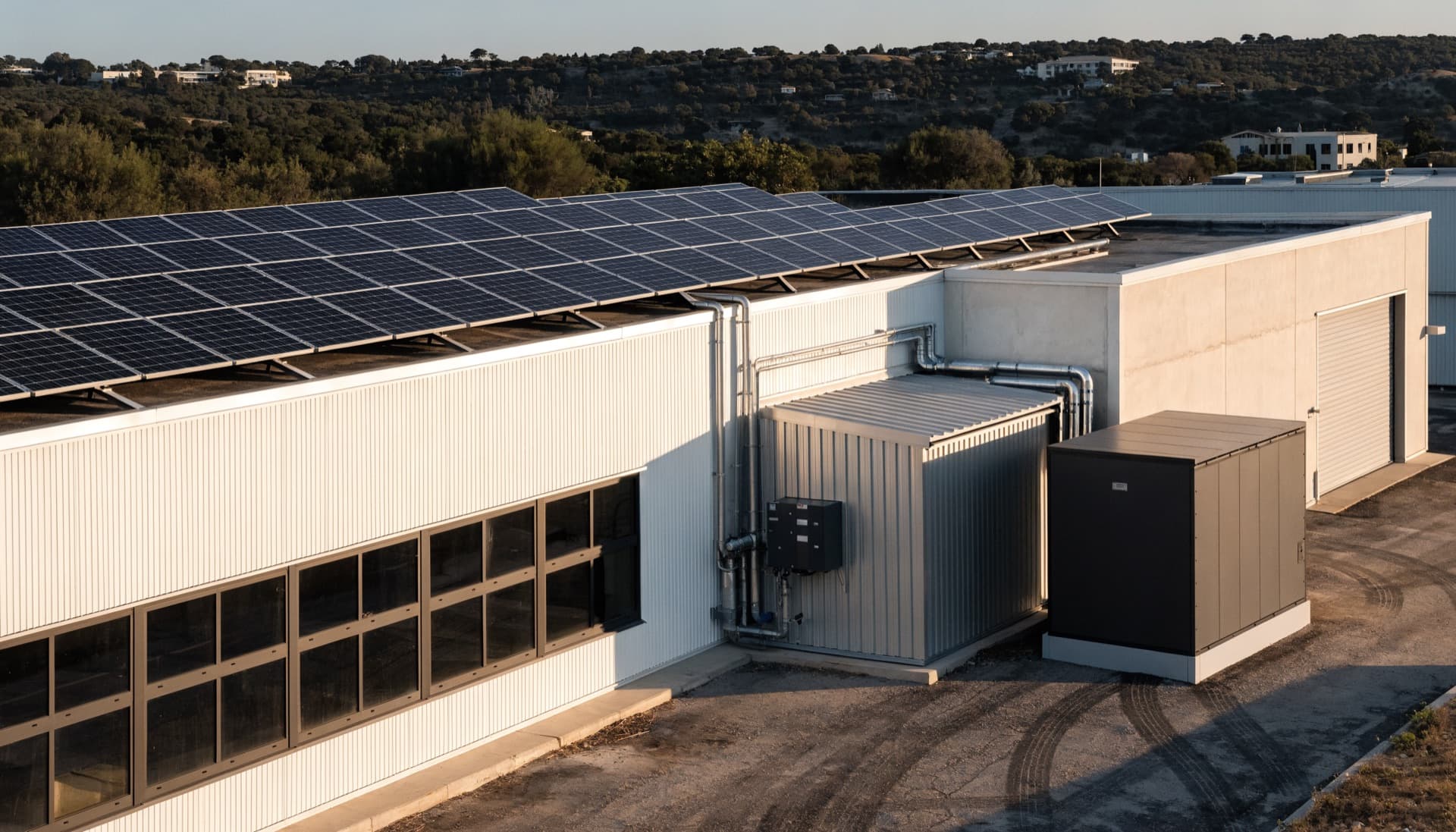
Net billing with ESS
Faster than export-only net billing
Export credits under Cyprus net billing are lower than the retail tariff. Storage keeps surplus on site for evenings and peaks so more kWh offset the full bill instead of a credit rate.
- Self-consume first, export only residual surplus
- Peak-tariff shaving with LFP ESS
- Fits offices, retail, and mixed-use sites with evening load
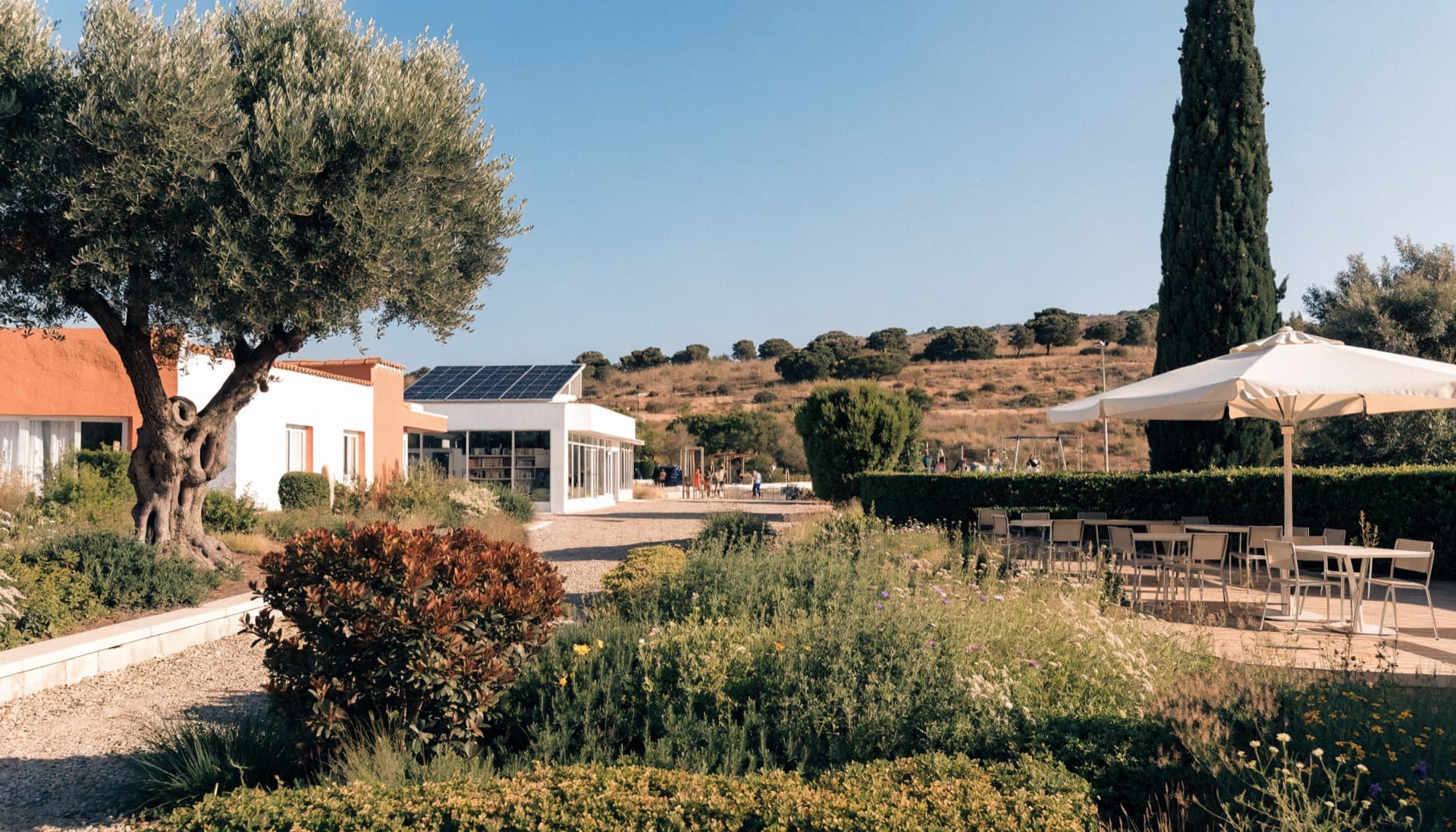
Measured client result
Greenland Family Park, outside Limassol
Hospitality and leisure load peaks in daylight — rides, kitchens, HVAC, and irrigation. A 60 kWp rooftop system was installed for self-consumption. Savings below are measured on the electricity bill, not a modelled IRR.
Figures are the client’s measured bill reduction on this 60 kWp array. Other sites vary with tariff, load shape, and roof yield. Not a guaranteed return.
C&I questions
- How can a Cyprus C&I solar system pay back in under two years?
- Sites with high daytime load displace expensive grid electricity rather than selling wholesale power. On industrial and hospitality roofs, self-consumption can cut the bill enough to recover capex in under two years. Greenland Family Park outside Limassol measured €2,500 per month saved on a 60 kWp system and a 1.9-year payback.
- What is net billing with ESS in Cyprus?
- Net billing credits surplus solar exported to the grid at the published rate, while you consume on-site first. Adding ESS stores midday surplus for evening or peak-tariff hours so less energy is exported at a low credit and more displaces retail kWh.
- When is off-grid C&I solar the right choice?
- Off-grid or weak-grid sites — farms, quarries, remote warehouses, events venues — avoid diesel genset fuel and connection delays. PV plus LFP storage and a hybrid inverter can run daytime process loads and overnight essential circuits.
- Who installs commercial rooftop solar in Cyprus?
- Lighthief Cyprus Ltd (HE 477423) delivers C&I EPC from survey to commissioning, with O&M from our Cyprus team. Contact Alexander Papacosta on +357 99 164 158 or office@lighthief.com.
Request a C&I site survey
Send a load profile or a daytime operating window. Lighthief Cyprus Ltd will size PV and, if needed, ESS. Direct: Alexander Papacosta, +357 99 164 158.
Or email office@lighthief.com · +357 77 77 00 50